Age spots: What are they, causes &
how to manage them
Age spots on the face:
What are they, causes & how to manage them
Do you have brown spots on your hands or small, dark discolorations on your face? Don't worry, these age spots are natural and harmless skin reactions. However, if you wish to reduce their appearance, this guide is for you. Discover what age spots are, their causes, and helpful advice on how to effectively reduce their appearance as well as some lifestyle choices you can make to help prevent or delay them from forming.
What are
age spots on skin?
Age spots are light brown to black discolouration of the skin. Because they increase in number and intensity over the years, they are called "age spots". In principle, however, these are pigment spots that occur as a result of skin aging and years of cumulative exposure to the sun.

- Age spots on the face:
Age spots on the face are very common as it's an area frequently exposed to the sun, which is a primary trigger for them. Age spots on the face are darkened patches of skin that typically appear in areas such as the cheeks, forehead, and nose.
- Age spots on the hands:
Age spots often occur on the back of the hands, as hands are another area of the body frequently exposed to the sun. Age spots on hands can appear flat and brownish in colour which can make them appear like brown stains. - Age spots on the body:
Age spots can also appear on other parts of the body, commonly on areas more frequently exposed to the skin such as the arms, shoulders, chest, and legs.
Identifying
Age spots on the face
Age spots on the face are common and harmless. They appear as flat, oval, or irregularly shaped spots with varying shades of brown and tan.

When to see a doctor about age spots on the face
It's important to note that even though age spots are generally harmless and not a cause for medical concern, it's essential to monitor any changes in the appearance of spots on the skin and consult a dermatologist if there is uncertainty about their nature or if they show signs of irregularity. Be sure to reach out do a doctor if you notice any of the following:
- Any dark spots are black
- Any dark spots are increasing in size over time
- Any dark spots have an irregular border
- Any dark spots feature unusual combinations of colors
- Any dark spots are bleeding
What causes
age spots?
Age spots are primarily caused by prolonged exposure to the sun's harmful ultraviolet (UV) rays. Here are the 4 main factors that contribute to their development:
1. Sun Exposure:
The primary cause of age spots is excessive sun exposure over the years. Skin damage caused by UV exposure is known as photoaging and can result in age spots.
2. Age:
As people age, their skin becomes more susceptible to developing age spots. The skin's ability to regenerate and repair itself diminishes, making it easier for melanin to accumulate in certain areas.
3. Genetics:
Genetics can play a role in the development of age spots. If your parents or close relatives have a history of age spots, you may be more prone to getting them as well.
Can you get rid of
age spots?
No, there is no way to completely get rid of age spots. However, there are actions you can take to help reduce their appearance.
How to help reduce the
appearance of age spots on the face
While it’s impossible to completely get rid of age spots, here are some effective approaches to help minimize their appearance.
- Skincare Routine:
Adopt a skincare routine to help address age spots by incorporating cleansers, serums, moisturizers and sunscreens that are specially formulated for this purpose. This is one of the safest and easiest solutions to address skin concerns, and therefore our most recommended.
- Other dermatological methods:
There are some dermatological procedures that may help reduce the appearance of age spots, but these carry risks and should be considered carefully under the guidance of a board-certified dermatologist. Before considering any invasive treatment (laser therapy, chemical peels, cryotherapy or microdermabrasion), consult a dermatologist to determine the most suitable approach for your skin type and the severity of your age spots.
NIVEA Luminous630 Skincare Routine
to reduce the appearance of age spots
Cleanse and Tone: Start your skincare routine with a thorough cleansing and toning process to remove dirt and impurities, preparing your skin to absorb the nourishing ingredients in your care routine.

Serum:
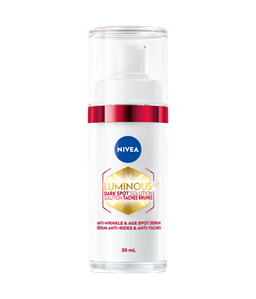
Choose a serum that is specially formulated to help reduce the look of dark spots. NIVEA Cellular Luminous630 Anti-Spot 2-in-1 Anti-Age & Spot Serum visibly reduces the appearance of dark spots in as little as 7 days* with collagen booster** for even, strengthened, younger-looking luminous skin.
*Dark spots are visibly reduced after each application with regular use
**Collagen booster for younger-looking skin; Soy extract: formulated with soy extract for firmer-looking skin
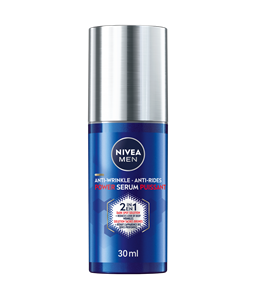
NIVEA MEN Anti-Wrinkle 2in1 Power Serum also helps reduce the look of dark spots. Formulated with patented LUMINOUS630® and Hyaluronic Acid*, this serum provides advanced reduction in the look of dark spots, age spots and wrinkles for younger looking skin in 2 weeks.
A nourishing face and neck cream can provide moisture and help strengthen the skin’s moisture barrier. NIVEA LUMINOUS630® Dark Spot Solution Even Tone Cream is a face and neck cream that visibly reduces the appearance of dark spots after only 2 weeks*, for fresh, revitalized-looking skin on the face, neck, and decollete.
*Dark spots are visibly reduced after each application with regular use.
Sun Protection
How does
NIVEA LUMINOUS630® help age spots?
After 10 years of research and testing, NIVEA has introduced a revolutionary solution to dark spot treatment through the patented ingredient, LUMINOUS630®. It works with the skin’s own process to reduce dark spots by acting on existing spots.
LUMINOUS630® targets the root cause of dark spots, helping to diminish their appearance, and some products in the range are enriched with ingredients such as Hyaluronic Acid and Collagen Booster* for added benefits depending on the formula.
*Collagen booster for younger-looking skin; Soy extract: formulated with soy extract for firmer-looking skin
How to prevent
age spots?
Preventing age spots involves adopting protective measures to minimise exposure to harmful UV rays and taking good care of your skin. Here are some effective strategies to help prevent age spots:
Sunscreen:
Apply broad-spectrum sunscreen with an SPF of 30 or higher daily, even on cloudy days. Reapply every two hours and after swimming or sweating. Sunscreen creates a barrier that helps protect your skin from the damaging effects of UV radiation.

Seek Shade:
Limit your time in direct sunlight, especially during peak hours when the sun's rays are strongest (usually between 10 am and 4 pm). Seek shade under trees, umbrellas, or wear protective clothing.
Protective Clothing:
Wear wide-brimmed hats, sunglasses, and long-sleeved shirts and pants made from tightly woven fabrics to shield your skin from the sun. By adopting these preventive measures and making sun protection a priority, you can significantly reduce your risk of developing age spots and maintain healthier, youthful-looking skin over time.
Age spots -
Takeaway
Age spots are a common skin condition that many people encounter as they age. Age spots are natural and commonly appear on sun-exposed areas like the face, hands, and legs. Despite being a natural and harmless reaction of the skin, they can be a cause of concern for some individuals who wish to reduce their appearance.
The good news is that there are options available for helping reduce the appearance of age spots through specially formulated skincare products.
You can help to prevent age spots by taking proper sun protection precautions such as wearing protective clothing, applying sunscreen regularly, and avoiding other sources of UV radiation such as tanning beds.
While age spots are generally not dangerous, it's strongly advised to have any dark spots on the skin examined by a dermatologist to rule out serious skin conditions, particularly if they are irregular or change shape or size.
Age Spots - FAQs
Products for Age Spots