

Wrinkles: What Causes Them &
How to Reduce Their Appearance
Wrinkles and Fine Lines:
Why we get them and how to manage them

Common Wrinkle Types
and Where They Appear

No matter how consistent you are with your skin care routine, bodies age over time, and one of the most obvious signs of aging is wrinkles. Worry lines, crow’s feet, laugh lines – they are all an expression of our lives that appear on our face and aren’t something that need to be eliminated, but wrinkles can be a source of self-consciousness for some people. In this article, you will learn about different types of wrinkles, what causes them, and how to help reduce their appearance if you desire to.
Wrinkles are creases, folds or ridges that appear in the skin as we mature. They look a bit like the lines in the palm of our hands. Wrinkles are a completely natural part of the aging process. Wrinkles are most commonly found on the face, neck and arms, as these parts of the body are often the most commonly exposed to the sun, but wrinkles can appear anywhere on the body.
7 common types of
WRINKLES
Here are 7 common types of wrinkles on the face:
- Forehead lines
Forehead lines or forehead wrinkles are horizontal indentations that run across the top of the T-zone. They are most noticeable when making certain facial expressions, such as lifting the eyebrows.
- Frown lines
Also known as Glabellar Lines and familiarly referred to as ‘eleven lines’ or worry lines, frown lines refer to vertical lines that develop between the eyebrows and create a shape that mimics the number eleven. Repeated facial expressions like frowning or furrowing eyebrows can cause these to become more prominent over time.
- Bunny lines
These refer to the fine horizontal lines and tiny creases that appear on the bridge of our nose and either side when we wrinkle it, such as when we laugh or smile.
- Crow's feet
This is the term given to fine lines that radiate from the outer corners of the eyes when squinting or smiling. They resemble the feet of a crow, hence the name.
- Laugh lines/nasolabial folds
As the name suggests, these lines appear on parts of the face that crease when we laugh. Known as nasolabial folds, these creases extend from both sides of our nose to the corners of our mouth. They can become more prominent and permanent over time, and can be exacerbated by smoking and sun exposure.
- Lip lines
These small vertical wrinkles typically form on both the lip and the skin above the upper lip. On the lips they often extend from one side of the mouth to the other. Lip lines are often prominent in smokers.
- Marionette lines
Also called melomental folds, marionette lines are long vertical lines that start at the corners of the mouth and continue down to the chin and jawline. They can cause our mouth to look downturned like a marionette doll, hence the name.
What causes
WRINKLES?
While wrinkles are a natural sign of life and expression, adopting certain habits may help skin appear smoother, firmer, and more supported over time. Prevention focuses on supporting the skin’s natural structure, maintaining hydration, and reducing factors that can accelerate visible ageing.
6 Daily Habits That Support Smoother-Looking Skin:
One common cause of wrinkles is aging. Collagen and Elastin are proteins naturally found in the skin that are responsible for its firmness and elasticity, and as we age, the body’s levels of Collagen and Elastin naturally decrease. As skin becomes less firm and elastic, wrinkles can more easily begin to form.
The muscle contractions involved in smiling, laughing, frowning, squinting, and other facial expressions contribute to the formation of wrinkles. Over time, as skin becomes less elastic and flexible, these natural expressions can leave a permanent impression on the face in the form of wrinkles.

Dynamic vs. static
WRINKLES
Wrinkles on the skin generally fall under two categories:
- Dynamic wrinkles – these wrinkles are visible when contracting muscles like making facial expressions, and are also commonly called ‘expression lines’. An example of dynamic wrinkles might include lines that appear on the forehead when you raise your eyebrows that you don’t see once your face is relaxed.
- Static wrinkles – these wrinkles are visible all the time, even when not making a facial expression or contracting muscles, but are more pronounced when muscles are contracted. Static wrinkles develop from a combination of repeated muscle contraction/expression combined with the natural loss of elasticity skin experiences with age. Using the example of the dynamic forehead wrinkles above, when repeating that expression over a long period of time, as you age, those wrinkles could become static wrinkles that remain visible even when your face is relaxed.
How to help
PREVENT WRINKLES
Unfortunately, you can’t stop the aging process or change certain factors like genetics, which inevitably have a part to play in wrinkles. However, there are some ways to help reduce the likelihood of developing premature wrinkles and to help support firmer, smoother-looking skin.
Sun radiation damages the skin and prolonged sun damage can lead to premature signs of aging such as uneven skin tone and wrinkles. Premature aging from the sun is known as photoaging and, aside from aesthetic changes, carries other health risks such as an increased risk of skin cancer.
Knowing how to protect your skin from sun damage is an easy step you can take to help prevent signs of premature aging caused by the sun. Use a daily sunscreen or moisturizer with SPF in conjunction with other sun protection measures such as wearing protective clothing and avoiding sun exposure during peak hours of the day.
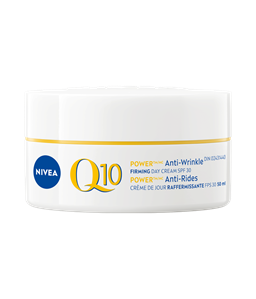
Using a facial moisturizer like NIVEA Q10 Power Anti-Wrinkle SPF 30+ Firming Moisturizer helps visibly reduce existing wrinkles while helping protect skin against sun damage.
2. Don’t smoke, or quit if you’re already a smoker
Smoking is another risk factor for wrinkles and premature skin aging. Smoking damages the skin and affects its elasticity, which means more wrinkles. Increased facial lines around the mouth are also a very common result of smoking due to repeated muscle contraction.


Eating a healthy diet is beneficial for the entire body, and this also impacts the skin. Ensuring that you’re well-nourished is important for overall health, including skin health, and studies have shown that certain types of regular cardiovascular exercise can also help support skin health. Consuming certain substances like alcohol can have a negative impact on the skin over time, so be sure to consult with a doctor about what diet, exercise, and lifestyle choices are healthiest for you.
Be sure to drink enough water to help keep your skin hydrated from the inside out. When the body is dehydrated, this can show on the skin in the form of temporary fine lines and wrinkles specifically due to dehydration.
The body does so much to repair and restore its tissues during sleep, and skin is no exception. Studies have shown that chronic poor sleep is associated with an increase in signs of intrinsic skin aging including compromised skin barrier function, so getting plenty of restful sleep is important to supporting the skin and helping to avoid signs of premature aging.
NIVEA Q10 skincare routine
to reduce the appearance of wrinkles
The following skincare routine with NIVEA Q10 products could help to visibly reduce the appearance of fine lines and wrinkles, for younger and firmer-looking skin in just 7 days. Remember to begin your morning and evening skincare routines by first cleansing the skin. This helps to remove dirt, excess oil, or makeup that can prevent the skin from properly absorbing the care products.

Serum for wrinkles
NIVEA’s Q10 Anti-Wrinkle Specialist Dual Action Serum has been developed to visibly reduce the appearance of even the deepest wrinkles and the look of newly formed wrinkles with clinically tested results in just 2 weeks. Its innovative combination of powerful ingredients GLYCOSTOP and Q10 provides smoother-looking skin and a visibly improved complexion. With regular use, this serum helps fine lines look smoother, helps reduce the look of newly formed wrinkles, and promotes radiant-looking skin.
Eye Cream for fine lines and wrinkles
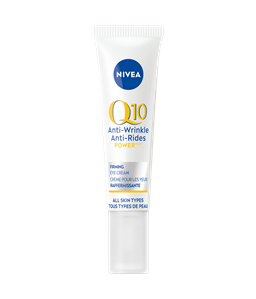
Your delicate eye area is subject to mechanical stress through blinking and other facial expressions; therefore, it's a good idea to give it targeted treatment. The NIVEA Q10 Power Firming Eye Cream is specially formulated for the delicate eye area and helps to visibly reduce the look of wrinkles and dark circles under eyes, for firmer feeling skin. Made for all skin types, its light and fast absorbing formula combines Q10 with Creatine and Hyaluronic acid to visibly reduce puffiness and minimize crow’s feet.
Day cream for fine lines and wrinkles
These help to provide essential moisture throughout the day whilst also offering additional defense against environmental stressors. The NIVEA Q10 Power Anti-Wrinkle Firming Day Cream SPF 30 visibly reduces wrinkles in 7 days and helps with visible signs of aging. This day cream combines pure Q10 with collagen boosters* to reveal smoother, younger-looking skin.
*Collagen Boosters for younger-looking skin: Pure Q10 + Creatine
Night cream for fine lines and wrinkles
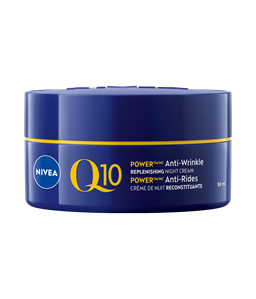
At night, switch up your moisturizer for one formulated to nourish your skin as you sleep. The NIVEA Q10 Power Anti-Wrinkle Replenishing Night Cream intensively nourishes skin overnight, helping to visibly reduce lines and wrinkles for younger-looking skin. Apply after your eye cream and before the NIVEA Targeted Wrinkle Filler.
Targeted wrinkle filler
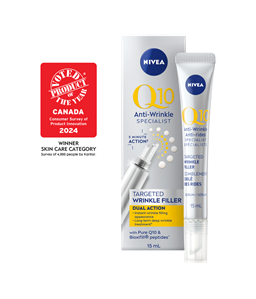
NIVEA Q10 Anti-Wrinkle Specialist Targeted Wrinkle Filler was voted Canada’s 2024 Product of the Year in the Skin Care Category by Kantar*, and it’s easy to see why! You’ll see action in 5 minutes** with instant wrinkle filling and deep wrinkle smoothening***. Formulated with Bioxifill® Peptides, this targeted wrinkle filler helps reduce the appearance of crow’s feet, nasolabial folds, lip lines, and forehead wrinkles, leaving you with radiant, healthy-looking skin.
*survey of 4,000 people by Kantar.
** Temporarily visibly reduces the appearance of fine lines & wrinkles by forming a hydrating film on the skin's surface.
***with regular use.

Help reduce the look of fine lines and
wrinkles with NIVEA Q10
While it’s true that aging is inevitable and there is no way to completely prevent or get rid of wrinkles, there are some products you can incorporate into your skincare routine to help reduce the appearance of fine lines and wrinkles and support firmer, smoother-looking skin.
NIVEA’s Q10 range works to support the skin by replenishing it with coenzyme Q10, a vital antioxidant naturally found in the skin that diminishes as we age, for a younger, healthy-looking appearance and visibly firmer skin.* In addition to the products featured in the routine recommendation above, there are several other moisturizing Q10 products available to target fine lines and wrinkles for younger-looking skin.
*with regular use. Use as directed.

Need help for
wrinkles and age spots?
If your skin is showing signs of aging from the sun including wrinkles and dark spots, NIVEA LUMINOUS630® Dark Spot Solution Anti-Wrinkle & Age Spot Serum visibly reduces the look of up to 10 years of accumulated age spots, with the first visible results in 7 days. Dark spots are visibly reduced after each application with regular use. In addition, patented LUMINOUS630® reduces the look of deep wrinkles in 7 days for even, younger-looking luminous skin.
Men’s skin care for
fine lines and wrinkles
Men’s skin care requires its own tailored formulas to suit the unique needs of men’s skin.

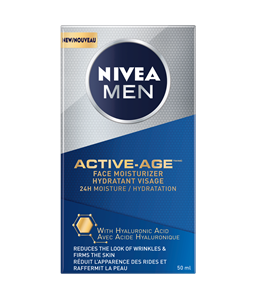
NIVEA MEN Active-Age™ Face Moisturizer is an anti-wrinkle cream for men containing Hyaluronic Acid to visibly reduce the look of wrinkles while providing long-lasting moisture for 24H. This face moisturizer helps skin around the face and neck to feel firmer for a healthy, younger-looking appearance.
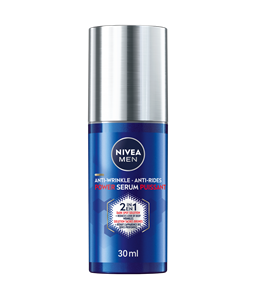
NIVEA MEN Anti-Wrinkle 2in1 Power Serum combines Hyaluronic Acid with the patented ingredient LUMINOUS630® to provide advanced reduction in the look of dark spots, age spots and wrinkles — for younger looking skin in 2 weeks.
Summary
Wrinkles are a natural part of the aging process - as we age, our skin becomes thinner, drier, and loses its elasticity. The decrease in Collagen and Elastin levels in the skin contributes to the formation of wrinkles over time.
Different types of wrinkles exist: wrinkles can appear in various forms on different areas of the face. Common types include forehead lines, frown lines, crow's feet, laughter lines, lip lines, and marionette lines.
While we cannot stop the aging process or alter genetics, lifestyle changes can help prevent wrinkles and maintain more youthful-looking skin. Tips include using anti-aging skincare products, protecting skin from sun damage, quitting smoking, eating a balanced diet, staying hydrated, and getting enough sleep.
While there is no permanent cure for wrinkles, following an anti-aging skincare routine can help reduce their appearance and give the skin a more youthful glow. However, it's essential to remember that wrinkles are a natural and beautiful sign of a full life and do not necessarily need treatment if one chooses to embrace them.
Wrinkles -
Frequently Asked Questions