NIVEA MEN FAQ | NIVEA
Questions About
NIVEA MEN?
Looking For
SOMETHING?
GENERAL
The list of ingredients allows people with allergies to make sure the product does not contains substances which they cannot tolerate. This is made possible by the use of uniform designations across Europe, Canada and other countries. The ingredients are not actually all in English but mostly Latin scientific names known to health professionals.
For this reason, a nomenclature has been prepared by an International Committee (INCI: International Nomenclature Cosmetic Ingredients) that all manufacturers of cosmetic products are obliged to use. If you have any questions on individual ingredients, please contact us directly. We would be happy to provide further information.
The skin tolerance of our products is carefully tested before the products are released for distribution. These tests are carried out in our research department and additionally by independent research institutes. However, it is impossible to fully exclude the occurrence of an intolerant reaction caused by individual over-sensitivity to one of the ingredients.
In chemistry there is a group of substances under the collective name 'alcohol'. Their physical states range from liquid to solid, with different properties. When 'no alcohol' is stated on a product, this refers to ethyl alcohol, which is also a component of alcoholic drinks.
In cosmetic products, ethyl alcohol has a refreshing and invigorating effect. In the full declaration of the ingredients on the packaging, ethyl alcohol is listed as 'alcohol' or 'alcohol, denat.'. The aliphatic alcohols (e.g. cetearyl alcohol or lanolin alcohol) are solid substances. They are used, for example, as emulsifying agents with a nourishing effect, which give the product the required consistency.
The water content of all emulsions on the market (independent of manufacturer) is between ca. 70 and 90 %. The latest scientific studies have shown that the moisturizing effect reduces the susceptibility of sensitive skins.
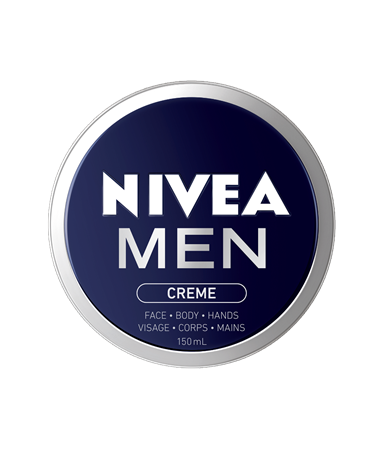
The water content of NIVEA Creme is ca. 70 %. It is a water-in-oil emulsion. NIVEA Creme has been popular for decades thanks to its excellent skin tolerance and excellent nourishing properties.
SHAVING
It depends on the condition of your skin and what you're used to (e.g. a dry shave is recommended for sufferers of chronic acne). The advantage of a wet shave is thoroughness, while the advantages of a dry shave are speed and convenience. In either case, you should help your skin recover more quickly after shaving by using the right aftershave care: e.g. aftershave enriched with moisturisers and vitamins.
Cold water is often enough to stop small cuts from bleeding. An anti-bacterial and styptic pencil will help stop heavier bleeding (available at any pharmacy).
This can be caused by many things:
Do you shave against the direction of hair growth?
Do you press down too hard on the blade?
Do you use strong-smelling shaving products containing alcohol?
Do you rub your skin dry with a towel after shaving instead of patting it?
Or do you use an electric shaver and rip the stubble out of your skin?
This often happens on a lower setting too. Consult a dermatologist if the problem persists.
Ingrown hairs are often caused by incorrect shaving.
Rule #1 when shaving: never shave against the direction of hair growth! If you shave in all directions, this quickly pulls the facial hair out, causing unnecessary stress for the skin and possibly inflammation. Uneven skin can make it even more difficult for facial hair to grow out – the hairs remain underneath the surface and grow inwards.
Tip: Regular exfoliation removes dead skin cells. Last but not least, if your skin is particularly bad, this can distort the hair follicles and sometimes the direction of hair growth, which can lead to hair growing along under the skin. Ingrown hairs can often be removed using tweezers (carefully!) – but only when a red circle has not yet formed around the hair. If this is the case, consult a dermatologist.
Selecting a shaving product really is a matter of personal taste.
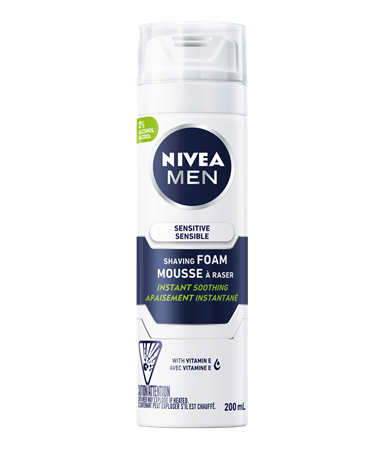
The advantage of a shaving foam is that it can be used directly from the can.
Shaving gel, on the other hand, is sprayed into your hand without having to shake the container. By moving it through your fingers in a circular motion, a large amount of shaving foam is created from a small amount of shaving gel.
Shaving with the help of a shaving cream is the classic approach. But it requires a shaving brush. Move the dampened brush in a circular motion until a creamy foam develops.
AFTER SHAVE
If necessary – but aftershave rounds off a good shave. Shaving every day exerts additional stress on the face, but the right aftershave care can help counterbalance this.
The gentle aftershaves from NIVEA MEN help replenish the skin to help care for the skin and help make it smoother after shaving, and Vitamins and provitamins help protect the skin and help support the regeneration process.
Yes. The burning you're experiencing is most definitely caused by the high amount of alcohol and perfume contained in your aftershave. Try using a product which is odourless and free of alcohol – and therefore kind to the skin.
No, of course not. The burning sensation is caused by the alcohol contained in most aftershaves. As the most important thing about aftershave is the aftershave care, you should use products containing no drying alcohol. They don't burn your skin and ensure optimum skin care.
FACE CARE
A man's facial skin is different to a woman's in many different ways : it is up to 30% thicker and contains a tighter network of fatty tissue called the subcutis. It also has higher water-binding properties which often make it appear firmer and tauter than women's skin. It tends not to dry out so much and is thus less likely to form wrinkles.
Men's skin has a higher fat content – younger men are thus more likely to get blackheads and other skin impurities. The 4-step care system developed by the NIVEA MEN research team – from cleansing, shaving and aftershave to skin care – is specifically designed to meet these special needs.
Q10 is your skin's own coenzyme and provides the cells with energy. The hectic pace of modern-day living, stress, and other adverse environmental effects increase the skin's need for Q10. The NIVEA MEN Revitalising Cream Q10 provides the skin with this essential coenzyme.
Low temperatures and the air in heated rooms dry out your skin faster. Since the moisture requirements of your skin are increased, richer creams that not only moisturize your skin but also help to retain the moisture for longer are advisable in winter. In addition a lower sun protection factor is normally required. The use of a rich night care product is also recommended in the winter season.
Dark circles under the eyes and puffiness can be caused by a lack of sleep or an unhealthy lifestyle. Micro circulation in the area around the eyes is very weak which can easily cause the drainage of metabolic waste to slow down. Lack of sleep and alcohol consumption can cause such disturbances to occur, and show up as puffiness. In order to dispose of the substances that cannot be broken down, your arteries expand. Since the skin under eye is very thin (about 0.5 mm in comparison to 2 mm in other skin areas), the arteries in this area are visible as dark colouring.
Massaging a cooling eye creme into the area under the eyes can visibly reduce the dark circles under the eye along with puffiness.