young woman using Nivea Express Hydration Body Lotion

How to build your body care routine

Learn the key benefits and steps to help you create your body skin care routine for smooth and hydrated skin.

How to Build Your Body Skin Care Routine

Having a structured body skin care routine that keeps your skin healthy-looking, feeling refreshed and nourished goes far beyond just showering regularly to clean up. It involves taking care of your skin from head to toe: cleansing, exfoliating, moisturizing, and applying sun protection to help keep your skin feeling smooth and looking healthy.

4 Benefits of maintaining a regular body skin care routine

young woman smiling
  1. Hydrated Skin: Regular moisturization helps to keep your skin hydrated, preventing it from becoming dry and itchy.  
  2. Smooth Texture: Exfoliating removes dead skin cells and can help promote a smoother skin texture.  
  3. Healthier-looking skin: Consistent care with certain skin-firming skincare products can help minimize the appearance of fine lines and wrinkles.  
  4. Protection from the Sun: Regularly using a broad-spectrum sunscreen as directed helps to protect your skin from signs of photoaging such as dark spots, fine lines and wrinkles that result from unprotected exposure to the sun’s harmful rays.  

5-Step body skin care routine


1. Cleanse:

Start your shower routine by using a body wash that suits your skin type. While in the shower, wet your skin with warm water and apply a small amount of body wash to your hands, pouf or washcloth. Gently massage it into your skin in circular motions, working from head to toe. Rinse thoroughly.
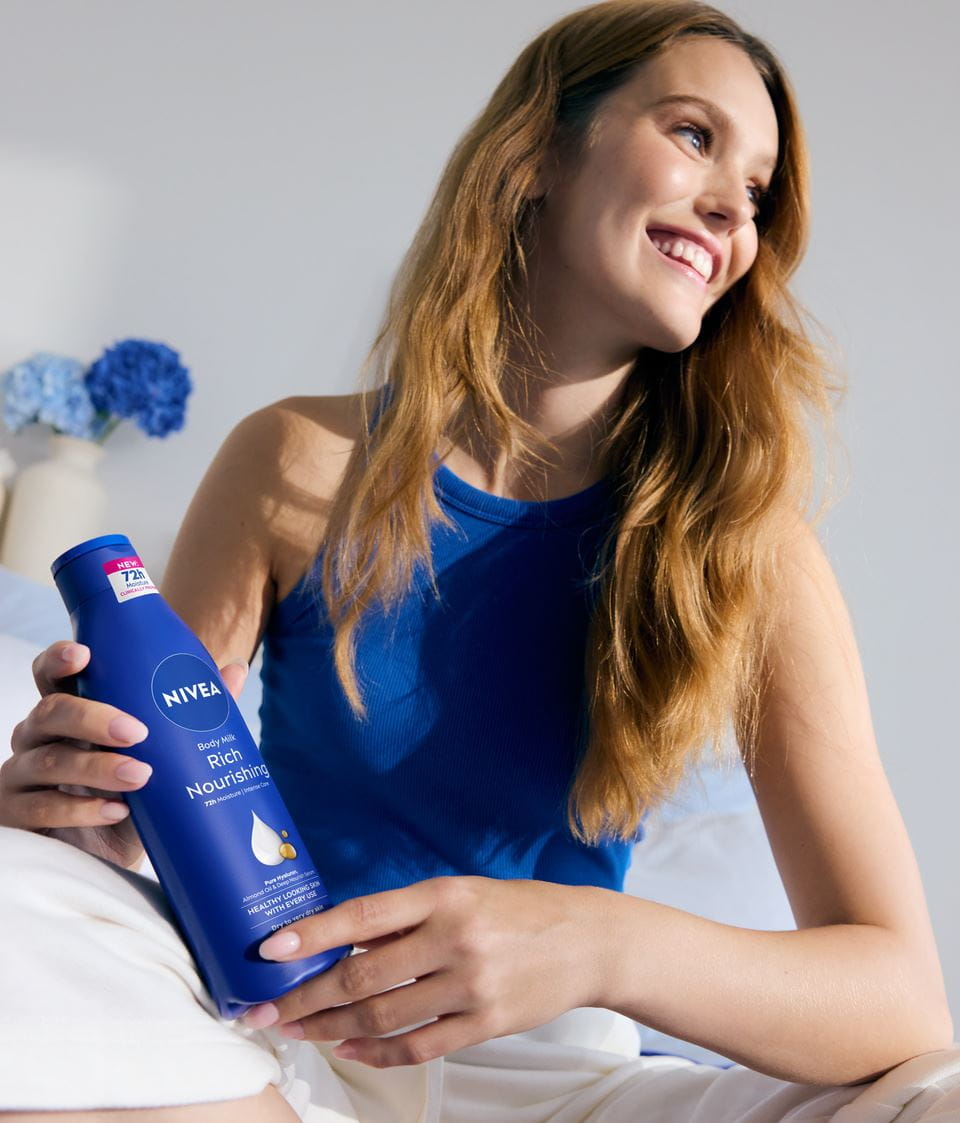
Young woman using Nivea Body Milk Rich Nourishing

2. Exfoliate:

Exfoliating helps to get rid of dead skin cells which, when they build up, can contribute to clogging pores or causing skin to look dull.

For best results, apply a body scrub to damp skin, and gently rub it in circular motions for 30 seconds to a minute. Focus on rough spots like your knees, elbows, and heels. Rinse off with lukewarm water and pat dry.

For normal skin, exfoliate 2-3 times a week to avoid overly stripping the skin of moisture or compromising the skin barrier.

3. Shave:

Hair removal is often part of a body skincare routine, and it helps to know the best skin-friendly way to shave, especially after exfoliating.

After exfoliating, apply shaving cream, foam or gel to the areas of your body that you wish to shave. A Nourishing Body Wash can also be used for shaving. Warm water from the shower will have softened the body hair to make shaving easier.

Make sure to shave in the right direction for the desired shave and body part. Going against the grain can give a closer shave, although when shaving more sensitive areas can lead to shaving irritation.

4. Moisturize:

Moisturizing the skin after showering is an important component of a body skincare routine. Here are some tips for how to apply body lotion:


Apply the right amount: While there is no hard, fast rule for an exact amount of body lotion to use, starting with a quarter-sized dollop is generally sufficient, though you may wish to apply more on particularly dry areas.

Massage in Sections: Start with a small amount in your palms and apply in sections—begin with your legs, then move to your arms and torso for even coverage.  

Focus on Dry Areas: Apply extra lotion to dry spots like elbows, knees, and heels for extra hydration.  

5. Sun Protection

Protecting your skin from sun damage is a crucial daily step to help prevent premature aging from the sun known as photoaging. Before going outside, apply a broad-spectrum sunscreen with at least SPF 30 to all exposed areas of your body, including your arms, legs, neck, and face. Use enough sunscreen to cover your skin evenly and massage it in until fully absorbed.

Reapply every two hours if you’re spending a lot of time outdoors, and use a water-resistant sunscreen if sweating or swimming. Daily sun protection when used as directed with other sun protection measures can help prevent premature skin aging and damage from the sun’s harmful UV rays.

Common body skin care concerns

While the steps in the previous section can be a foundation for your body skincare routine, there may be specific skin concerns that you wish to address. Here are a few examples, and ways you can mitigate them:

young woman using Nivea Anti Marks and Spots Body Cream

Dry skin:

If you have dry skin, use nourishing moisturizing creams with formulas focused on intensive hydration. Avoid long, hot showers as they can strip your skin of natural oils, which leads to dryness.

If you experience dryness, apply a rich, nourishing moisturizer such as NIVEA® Nourishing Body Milk. Enriched with Hyaluronic Acid, Almond Oil & Deep Care Serum® for noticeably softer & smoother-looking skin, its improved formula moisturizes for 72 hours* and deeply nourishes for healthy looking skin with every use. This body milk is non-greasy and quick-absorbing for dry to very dry skin.
*with regular use

Loss of elasticity:

If your skin has lost elasticity or is dry, try NIVEA Q10 Pur + Vitamin C Firming Body Lotion. As you age, the skin naturally begins to lose its elasticity. This Q10 firming body lotion with Collagen Boost Complex*, containing pure Q10 + Vitamin C, provides firmer-looking skin and improves skin elasticity in just 7 days. Deeply moisturizes for up to 72 hours+. Quick absorbing lotion for normal skin.  

*complex tested in-vitro on skin cells +with regular use 

Extra body skin care tips and tricks

  1. Hydrate: Drink plenty of water throughout the day to keep your skin hydrated from the inside out.  
  2. Dry Brushing: Use a dry brush before showering to help exfoliate the skin  
  3. Night Care: Use moisturizing products at night to help support and replenish skin’s hydration levels.  
  4. Shaving: Use a moisturizing shave cream and follow with a rich moisturizer to help soothe and moisturize sensitive skin after shaving.  
  5. Foot Care: Regularly exfoliate and moisturize feet to help prevent dryness, cracking, and calluses.  
  6. Keep an all-purpose moisturizer nearby: NIVEA Care is a versatile moisturizer that can be used on face, body, and hands that’s perfect for on the go to top up your skin’s moisture whenever needed throughout the day. 

Body skin care routine summary

A regular body skincare routine is essential for maintaining smooth, hydrated, and healthy-looking skin. Key steps include cleansing, exfoliating, moisturizing, and applying sunscreen daily. Proper skin care can help to prevent dryness and when using a sunscreen regularly and as directed, can help prevent signs of early skin aging caused by sun.


Body skin care routine FAQs

How often should I exfoliate my body?

Exfoliate your body 2-3 times a week to remove dead skin cells and help maintain smooth skin.

Can I use the same moisturizer for my body and face?

You may wish to use separate products specifically formulated for the body and face as they cater to different skin needs, though there are some versatile moisturizers like NIVEA Care that are suitable for use on both the body and the face.

What should I do if I have sensitiveskin?

Try to avoid over-exfoliating to help prevent irritation, use warm, not hot, water and a soap-free cleanser when showering or bathing. Try testing any new product on a small section of skin before applying all over.

How can I help prevent dry skin?

Help to keep your skin hydrated by drinking plenty of water and applying a moisturizer daily, especially after showering.

What are the benefits of using body oil?

Body oils can help to smooth skin and provide a radiant glow.

What is dry brushing and what are its benefits?

Dry brushing, as the name suggests, involves brushing your skin with a dry brush before showering. It can help exfoliate the skin.

IS IT IMPORTANT TO ADJUST MY  SKINCARE  ROUTINE WITH THE SEASONS?

If you notice your skin changes with the seasons, you may need to alter your skincare routine accordingly. It’s common to experience dry skin in the colder, drier winter months, for example, so in the winter you may find that your skin needs more added moisture and a richer lotion or cream than during warmer months of the year.

The information provided herein is not intended to be medical advice. Nor is it intended to treat the underlying skin disease or condition. The information is provided solely to: 

  1. Moisturize, soften and smooth dry skin 
  2. Improve the appearance of the skin 
  3. Achieve healthier-looking skin